Earlier this year I saw the culture site Brain Pickings feature the book Close to the Machine: Technophilia and Its Discontents by Ellen Ullman. There was a line of her's they quoted that struck me like a captivating trance:
"Soon the beautiful crystal must be recut. This lovely edge and that one are gone. The whole graceful structure loses coherence. What began in a state of grace soon reveals itself to be a jumble. The human mind, as it turns out, is messy...The messiness cannot go into the program; it piles up around the programmer...Soon the programmer has no choice but to retreat into some private interior space, closer to the machine."
Something about this resonated as I've been dabbling in learning code here and there throughout the year. Indeed my thinking has gotten messier since taking on developing this new skill, but reading bits and passages from Close to the Machine seemed to instill courage to heap on the messiness. In fact life probably never gets less messy, so let's bring it on.
This book has been on my to-read list for sometime and I finally cracked into it later this week. The text channeled in through my eyes like the fluid compulsion a programmer must feel when connecting to solutions long strained for. Close to the Machine reads like a well crafted novel. The sentence is precise. Beyond being a book classified in Technology or Memoir, is something that rings of literature, with swell philosophies that don't feel prattled but earned.
"I imagined I would show him into this music, the slow movement's aching play of major against minor, the intense miracle of logic which somehow, with all its precision and balance still burst with passion. 'Here is how I know God is a passionate engineer.'"
An odyssey of sorts as Ellen Ullman progresses her career as a software engineer, but also examines her own ability to relate to the human experience. Here it takes on the feel of a love story stripped of cliches and mushiness. Yes, there are bits about her relationships with men, and women. And parents. But the thread of love gravitates toward a love of career, and takes it deeper than anything else that focuses on the story of one's occupation.
"In the middle of the demo, I realized how fortunate we were to be engineers. How lucky for us to be people who built things and took our satisfactions from humming machines and running programs. We certainly wouldn't mind if the company went public and we all got fabulously rich. But the important thing was right in front of us. We had started with some scratchings on a white board and built this: this operational program, this functioning thing."
I hope progressions in technology bring along parallels in her train of thought, and perhaps we roll into an age where career obsession revolves more around function, and operating in some way that works, versus the ladder of wealth that gets the attention as one considers success in spite of sometimes stomping on desirable actions. Enter refinement of logic. Ullman, an admitted ex-communist, may not have shed those leanings, but seems to have refracted bits of communism through the blend of logic, and morals. As she questions a wealthy friend: "These men you advise - what do you think drives them? It has to be more than money; they already have a lot of money. What is it - what is inside of them?" Sometimes behavior can be debugged too. Yes I zeroed in and dragged in some mentions of communism. Before you go calling me a communist, I'm not one yet. But perhaps as I gain more courage to sift through and write code, I may learn to have the courage to extract bits from theories for the sake of contributing a unique line to something that works for the big damn machine that is this world we live in.

scribblings, jottings, scenes & stories of Jeff Phillips, writer/performer/producer.
Showing posts with label book review. Show all posts
Showing posts with label book review. Show all posts
Sunday, August 25, 2013


Tuesday, August 20, 2013
A Reflection on Terence McKenna's True Hallucations
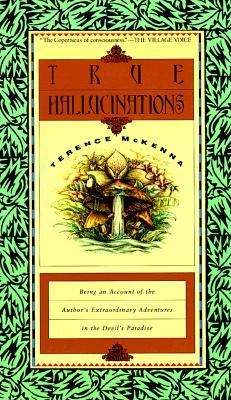
True Hallucinations reads like a mad scientist's journal, and for that I enjoyed it. It excites you. Running with ideas is fun. Though in some parts, hearing someone rant about a mushroom trip while you're not on mushrooms yourself can feel a little like being sober in a packed bar, for that it can also get a little exhausting. In the end curiosity in his point of view propelled me further.
I'm intrigued to check into The Invisible Landscape where the McKenna brothers seem to go deeper into the actual Time Wave Theory, whereas True Hallucinations is more so an account of their drug adventures. But an idea that resonates for further exploration is the notion that perhaps alien life has already colonized our planet in the form of certain plants and mushrooms. These mushrooms serve as a sort of star ship for voyages deep into the universe itself. Yeah it sounds a little crack-pottish, and McKenna is a crackpot, though he admits to it and has fun with it. If the book lacked his humor and self deprecation it would have been more difficult to humor back and go for the ride. The universe is crazy, so fuck it, let's explore the nooks and crannies. Ah, the fringe sciences.
Here's a quote to give you a sense of the sort of thinking, that whether you're into hearing about other people's drug stories and mind blowing stoner thoughts, well, the beautiful intricacy of the physical world deserves a little trance-like observation from time to time.
"[Sand dunes] bear a resemblance to the force that created them, wind. It is as if each grain of sand were a bit inside the memory of a natural computer. The wind is the input that arranges the grains of sand so that they beam a lower-dimensional template of a higher-dimensional phenomenon, in this case the wind. There is nothing magical about this, and it does not seem mysterious to us: wind, a pressure that is variable in space. In my thinking, the genes of organisms are grains of sand arranged by the ebb and flow of the winds of time. Naturally, then, organisms bear the imprint of the inherent variables in the temporal medium in which they arose. DNA is the blank slate upon which the changing temporal variables have had their sequin and relative differences recorded. Any technique that saw into the energetic relationships within a living organism, such as yoga or the use of psychedelic plants, would also give a deep insight concerning the variable nature of time." - Terence McKenna, True Hallucinations: Being An Account of The Author's Extraordinary Adventures in the Devil's Paradise.
I just finished this last night, so these are just some initial thoughts. As I digest, there may or may not be some more nuggets of brilliance or bullshit to sift through and write more about it. Even if there are more swells of bullshit, I have a lot of respect for Terence McKenna. He goes places and shares his experience, and I find nothing wrong with that. Mushrooms grow in shit and when life's circumstances or societal structures get to feeling like bullshit, hats off to someone who devours a delectable fungus and appreciates the show. Because what's behind the curtain may reveal some incredibly important cosmic knowledge we need someday to save humanity.
Subscribe to:
Posts (Atom)